What Is Loose Incense?
Loose incense is the simplest form: a blend of ground aromatic materials in granular form, burned on a heat source like charcoal or an electric incense heater. There are no binders, no shaping, no drying time. You grind, you blend, you burn.
This is how most of the world's traditional incense was (and still is) used. Egyptian temple priests sprinkled Kyphi on coals. Native American traditions place sage and sweetgrass on hot stones. Japanese soradaki ("empty burning") places loose blends near buried charcoal. The principle is always the same: heat releases fragrance from aromatic materials.
Loose incense is also the best way to learn the craft. It requires minimal tools, tolerates imprecise measurement, and gives you immediate feedback on how ingredients behave. Every incense maker should master this form before moving on to sticks, cones, or neri-koh.
For loose incense, grind your ingredients to roughly the consistency of coarse sea salt or coarse sand. You want small granules, not fine powder. Fine powder tends to flare up and burn too quickly on charcoal, while larger chunks won't release their fragrance evenly.
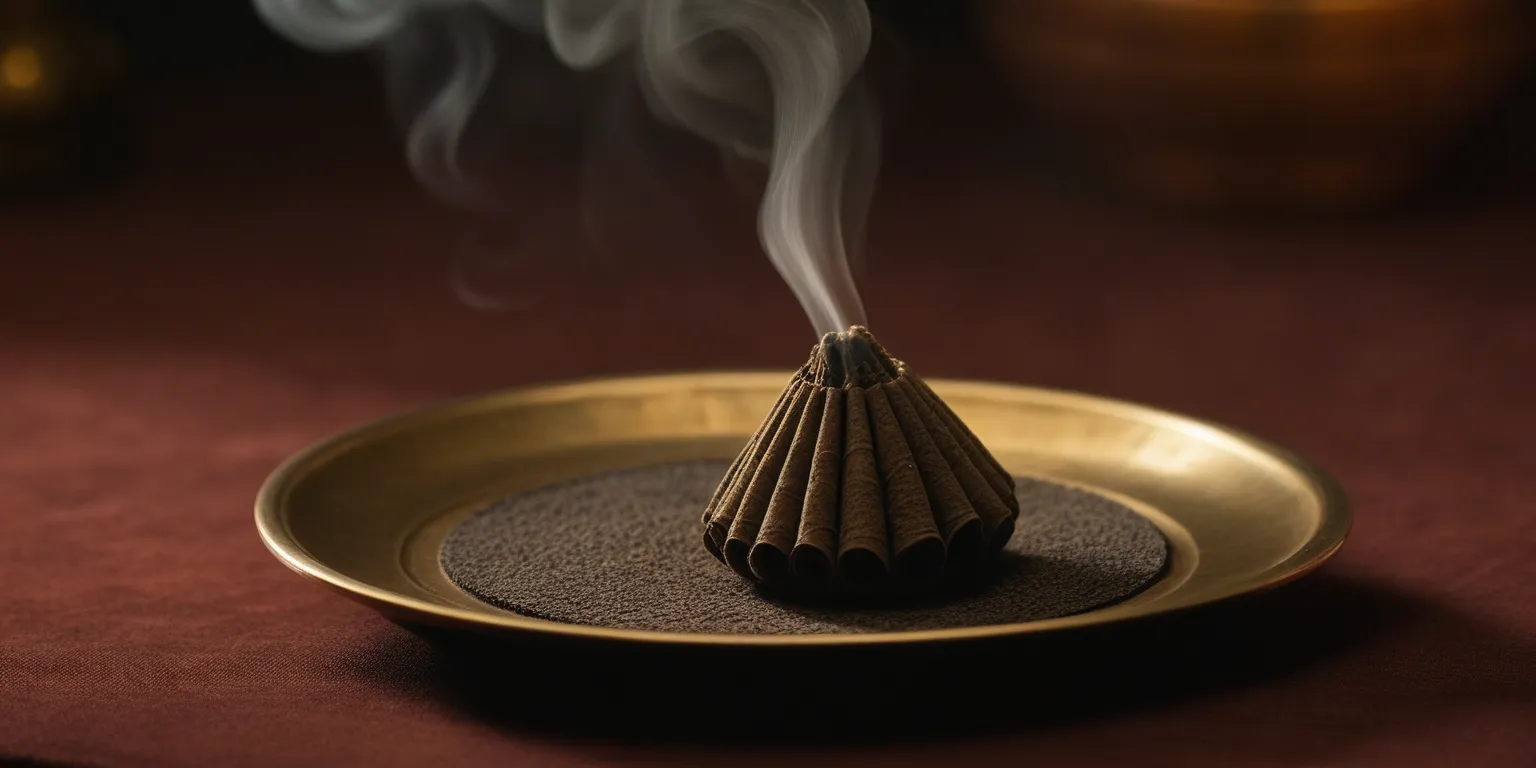
A Universal Tradition
From Indian dhoop to Japanese soradaki, loose incense takes countless forms across cultures. The principle remains the same everywhere: heat applied to aromatic materials releases their fragrance.
The Five-Step Process
Measure Your Ingredients
Decide on your recipe and measure each ingredient in its whole form. Use a scale (preferred) or volume measures like teaspoons. Write down everything; you'll want to reproduce your successes and learn from your experiments.
Start with small batches of 30–50 grams total while you're learning. This limits waste from failed experiments and lets you iterate quickly.
Grind Each Ingredient
Process each ingredient separately, adapting your technique to the material:
- Resins: Freeze 15–30 minutes, then pound in mortar and pestle. Mix in a dry wood powder to prevent clumping.
- Woods: Break into chips with hammer/chisel, then grind in a coffee grinder or mortar.
- Herbs and flowers: Crumble by hand or pulse briefly in a coffee grinder.
- Spices: Crush hard spices in mortar, then grind to desired texture.
After grinding, re-measure each ingredient to confirm your ratios. Grinding changes volume, so adjust as needed.
Blend and Merge
Combine all ground ingredients in a mixing bowl or large mortar. Give the combined mixture a few minutes of gentle grinding in the mortar. This isn't about reducing particle size further, but about "merging" the ingredients. The friction and pressure help the aromatic oils begin to mingle, creating a more unified scent.
Stir thoroughly until the mixture appears uniform in color and texture, with no visible pockets of individual ingredients.
Test and Adjust
Take a small pinch and burn it on charcoal (or heat on an incense heater). Evaluate the scent:
- Is any single ingredient dominating? Reduce it or increase others.
- Does it smell harsh or acrid? You may have too much resin relative to wood, or the charcoal is too hot.
- Does it seem flat or one-dimensional? Add a contrasting note: a touch of spice to a woody blend, or a bright herb to a heavy resin mix.
- Is it pleasant but missing something? Often a small amount of frankincense or sandalwood fills gaps.
Adjust your recipe based on what your nose tells you. Re-blend and test again. This iterative process is how you develop your skills.
Store and Age
Transfer your finished blend to a glass jar with a tight-fitting lid. Label it with the recipe name, date, and ingredients. Store in a cool, dark place.
Even loose incense benefits from aging. An overnight rest allows the scents to begin merging. A week or two produces noticeable improvement. Some blends peak after several months. Check periodically: open the jar, sniff, and note how the scent evolves.
How to Burn Loose Incense
On Charcoal
The traditional and most common method. You'll need self-lighting charcoal discs (available at most incense suppliers), a heat-proof vessel, and sand or ash to insulate.
- Fill your vessel with at least 2 cm of sand or ash
- Hold the charcoal disc with tongs and light one edge; self-lighting discs will spark across the surface
- Place the disc on the sand and wait 5–10 minutes until it's fully ashed over (glowing gray, not black)
- Place a small pinch of incense on top of or beside the charcoal
- Add more incense as the scent fades, since small amounts frequently is better than one large heap
Direct contact with charcoal burns hot and fast, producing more smoke. For a gentler, more refined scent, place the incense beside the charcoal rather than on top, or bury the charcoal under a layer of ash and place the incense on the ash above it. This is the principle behind Japanese kodo ceremony heating.
On an Electric Heater
Electric incense heaters warm ingredients without combustion, producing little to no smoke. This reveals the purest scent profile and is the preferred method for fine blends and neri-koh. Place a small amount on the heating plate and adjust the temperature: lower heat for delicate blends, higher for dense resins.
On a Candle Warmer
A budget alternative: place incense in a small ceramic dish or on foil above a tealight candle. The indirect heat gently releases fragrance. Adjust the height to control temperature.
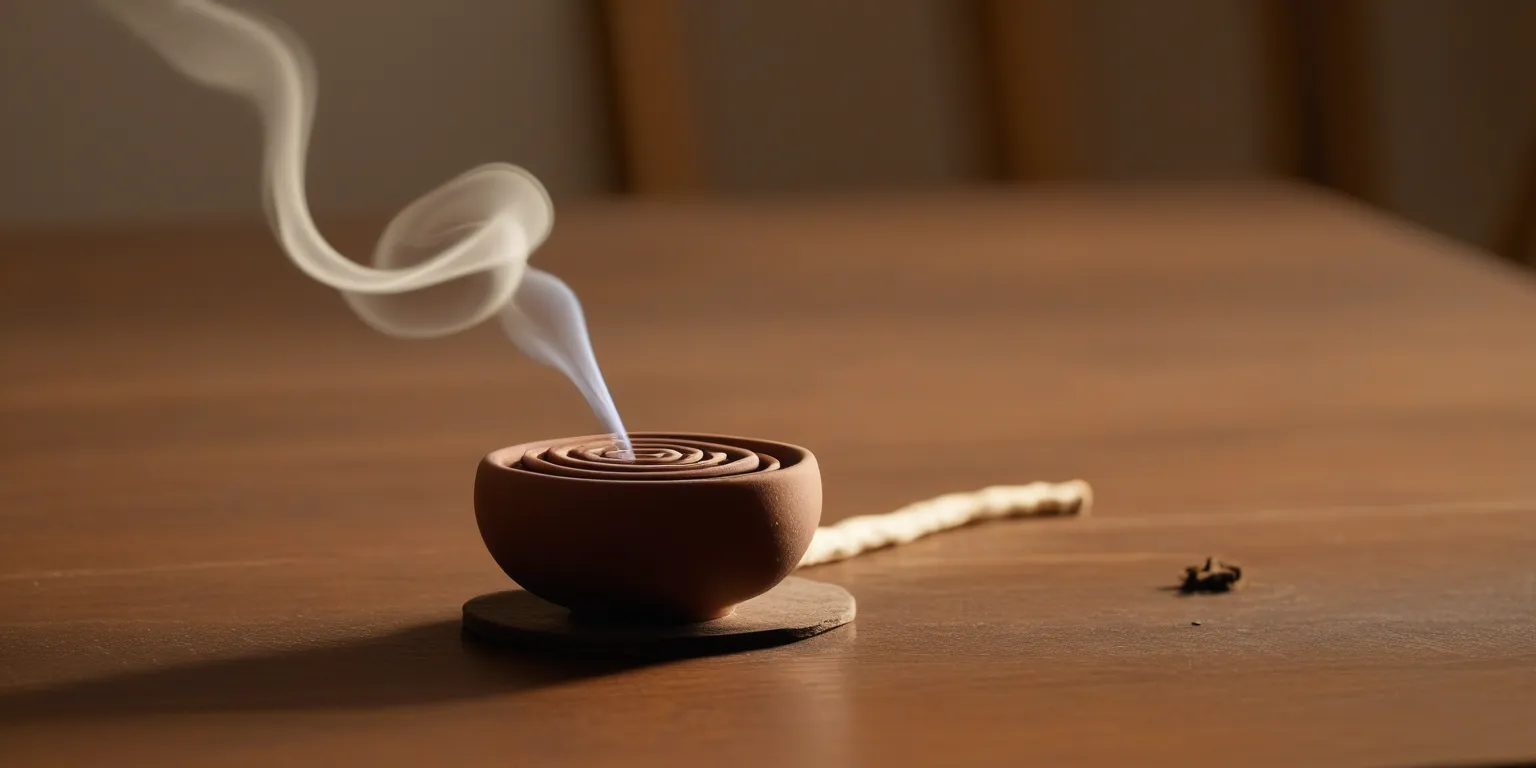
Incense Trails
An elegant variation on loose incense. A granular blend is laid in a thin line or pattern in a shallow dish of ash, then lit at one end. The trail smolders slowly along the path, providing a long, steady release of fragrance.
How to Make a Trail
- Fill a shallow, heat-proof dish with fine white ash (available from incense suppliers or made by burning hardwood)
- Smooth the ash surface flat
- Using a small spoon or a trail-making tool, lay your incense blend in a thin line across the ash. You can create straight lines, spirals, or patterns
- Light one end of the trail with a match or lighter
- Blow out the flame once the trail catches and begins to smolder
Trails work best with finely ground (but not powdered) blends that contain a good proportion of wood. Heavy resin blends may not sustain a trail burn without added wood powder or makko.
Starter Recipes
These recipes are designed to teach you how different ingredient families interact. Each emphasizes a different character.
Temple Gate
| Ingredient | Parts |
|---|---|
| Frankincense | 3 |
| Myrrh | 2 |
| Sandalwood | 1 |
| Cinnamon bark | ½ |
Green Forest
| Ingredient | Parts |
|---|---|
| Cedarwood | 3 |
| Juniper berries | 1 |
| Pine needles (dried) | 1 |
| Frankincense | 1 |
| Rosemary | ½ |
Spice Road
| Ingredient | Parts |
|---|---|
| Sandalwood | 3 |
| Benzoin | 2 |
| Clove | ½ |
| Cardamom | ½ |
| Cinnamon | ½ |
| Rose petals | ½ |
Troubleshooting
Burns Too Fast
Your granules may be too fine, or you have too much resin relative to wood. Try a coarser grind and increase the proportion of wood in your blend. Also try placing the incense beside the charcoal rather than directly on top.
Smells Harsh or Acrid
Usually caused by burning too hot. Let the charcoal fully ash over before adding incense. Bury the charcoal under ash for gentler heat. If the blend itself is harsh, increase base notes (sandalwood, benzoin) and reduce sharp spices.
One Ingredient Dominates
Some ingredients are far more potent than others. Clove, camphor, patchouli, and star anise can overwhelm a blend even in small quantities. Reduce the dominant ingredient by half and retest. It's easier to add more than to subtract.
Blend Smells Flat
You may be missing contrast between note levels. Add a bright top note (citrus, cardamom, pine) to lift a heavy base, or a deep base note (sandalwood, benzoin) to anchor a thin, herbal blend. Small amounts of frankincense often fill gaps.
Resins Won't Grind
They're not cold enough. Freeze longer, at least 30 minutes (overnight for very soft resins). Mix in dry wood powder while grinding. Use a straight pounding motion, not circular. If all else fails, grate with a microplane.
Blend Went Moldy
Moisture got in. Ensure jars are fully sealed. In humid climates, add a silica gel packet to the jar. If using honey or fruit in a blend, add a pinch of charcoal powder and ensure the mix is thoroughly dry before sealing.
Ready for the next level? Try shaping your blends into sticks and cones, or explore the refined art of Japanese kneaded incense.